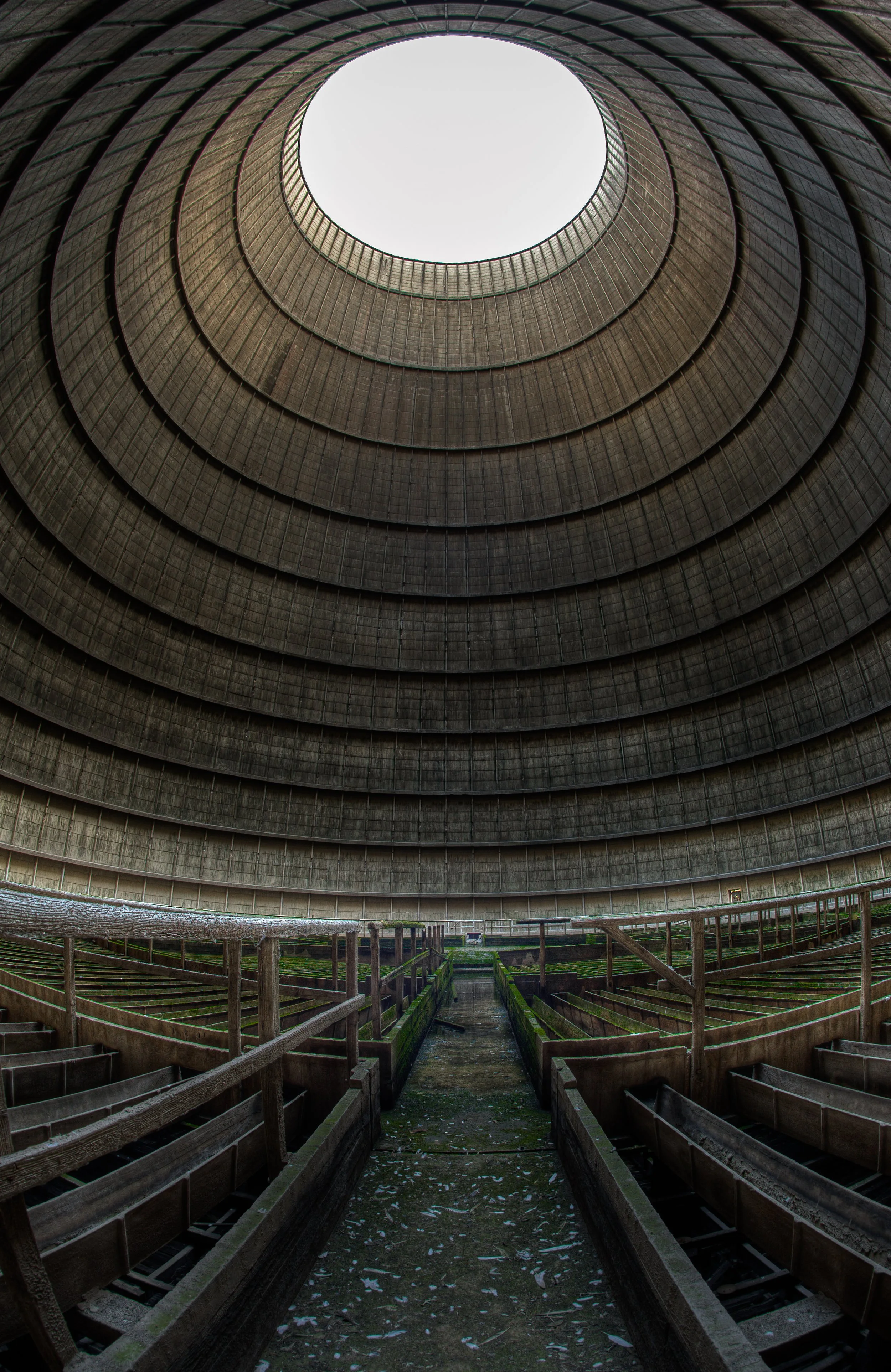
inside the belly of the beast
You’ve all seen them either from the motorway or whilst on a passing train. Huge hyperbolic chimneys releasing a dense white billowing plume which is often mistaken for smoke, but is in actual fact water vapor and tiny liquid water droplets. They keep the powerplant efficient and stop it overheating…….but have you ever been inside one??
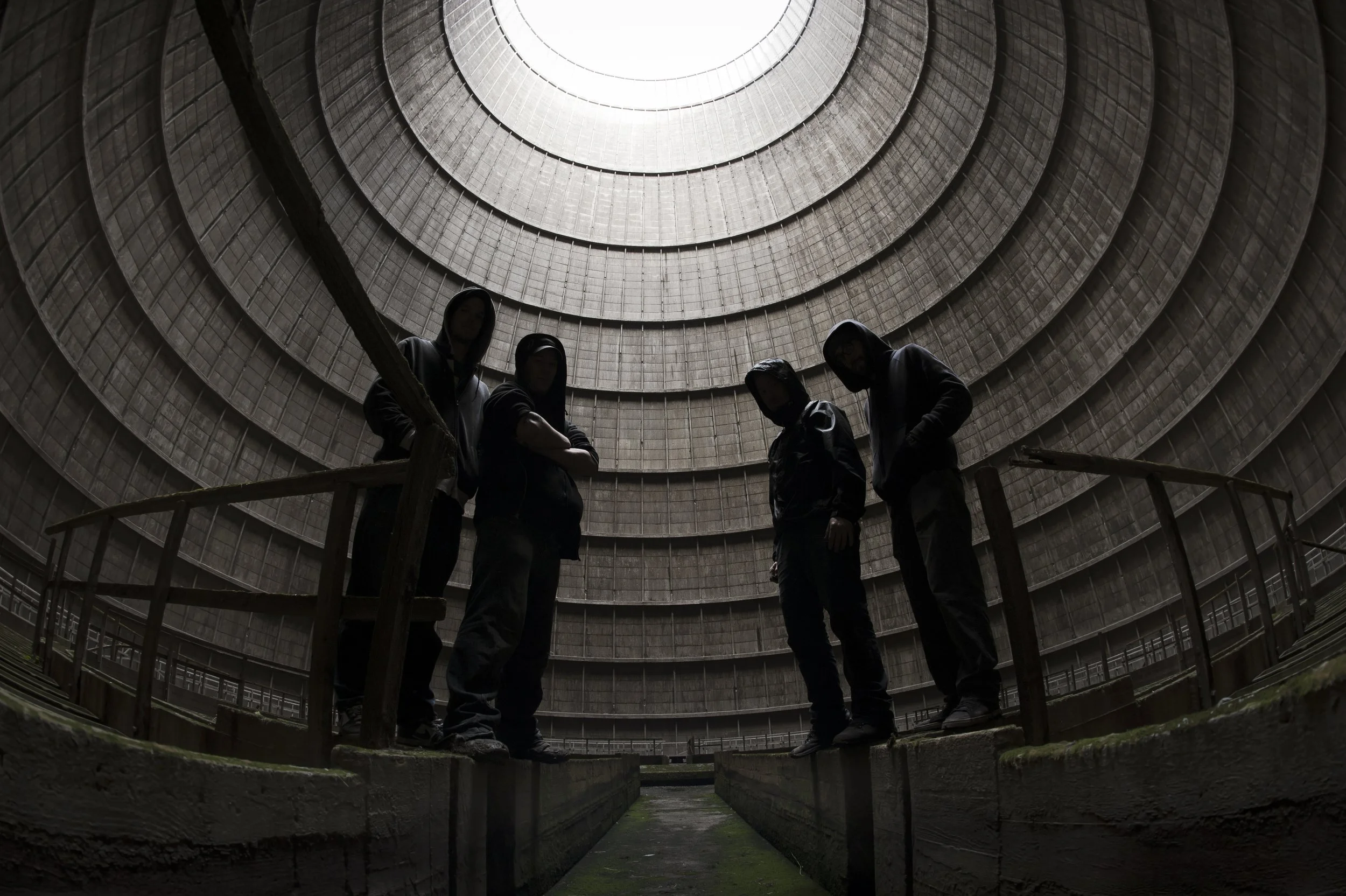
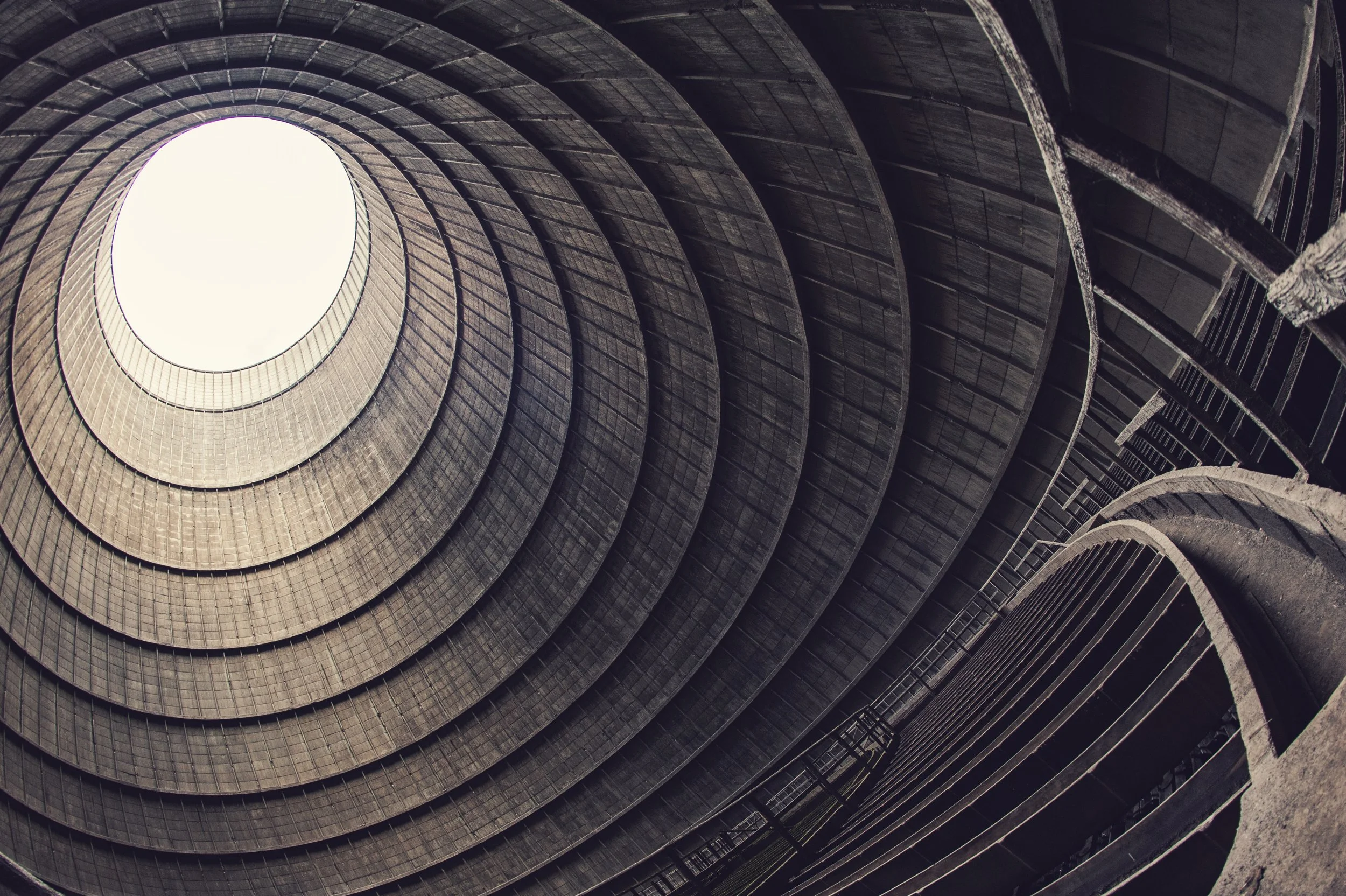
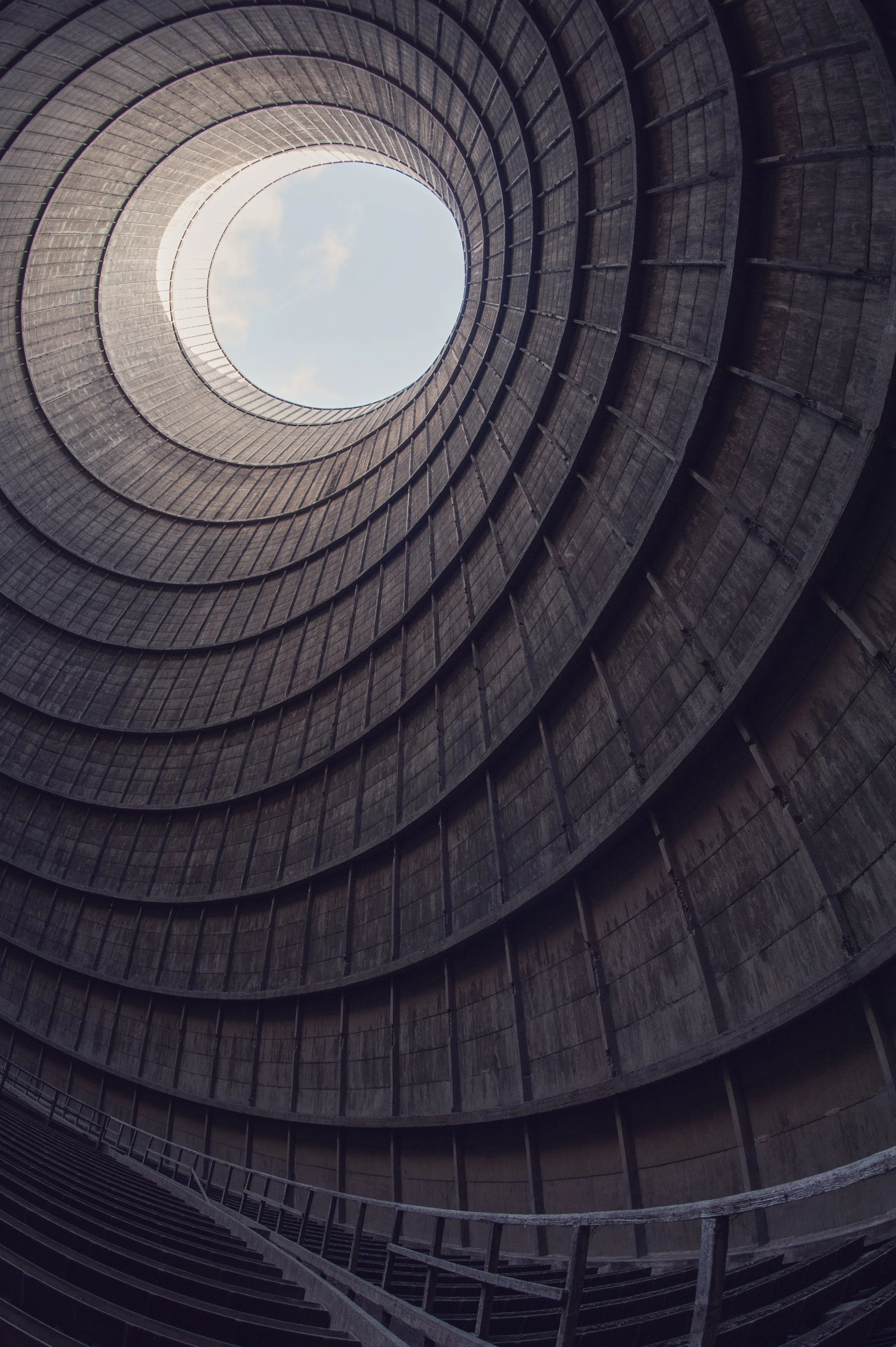
Common in large nuclear and coal plants you really can’t comprehend just how vast they are until you are up close and personal, or in our case , inside them.
They are a tall hour glass shape and use natural convection to push the hot air up and out of its apex so no fans are required.
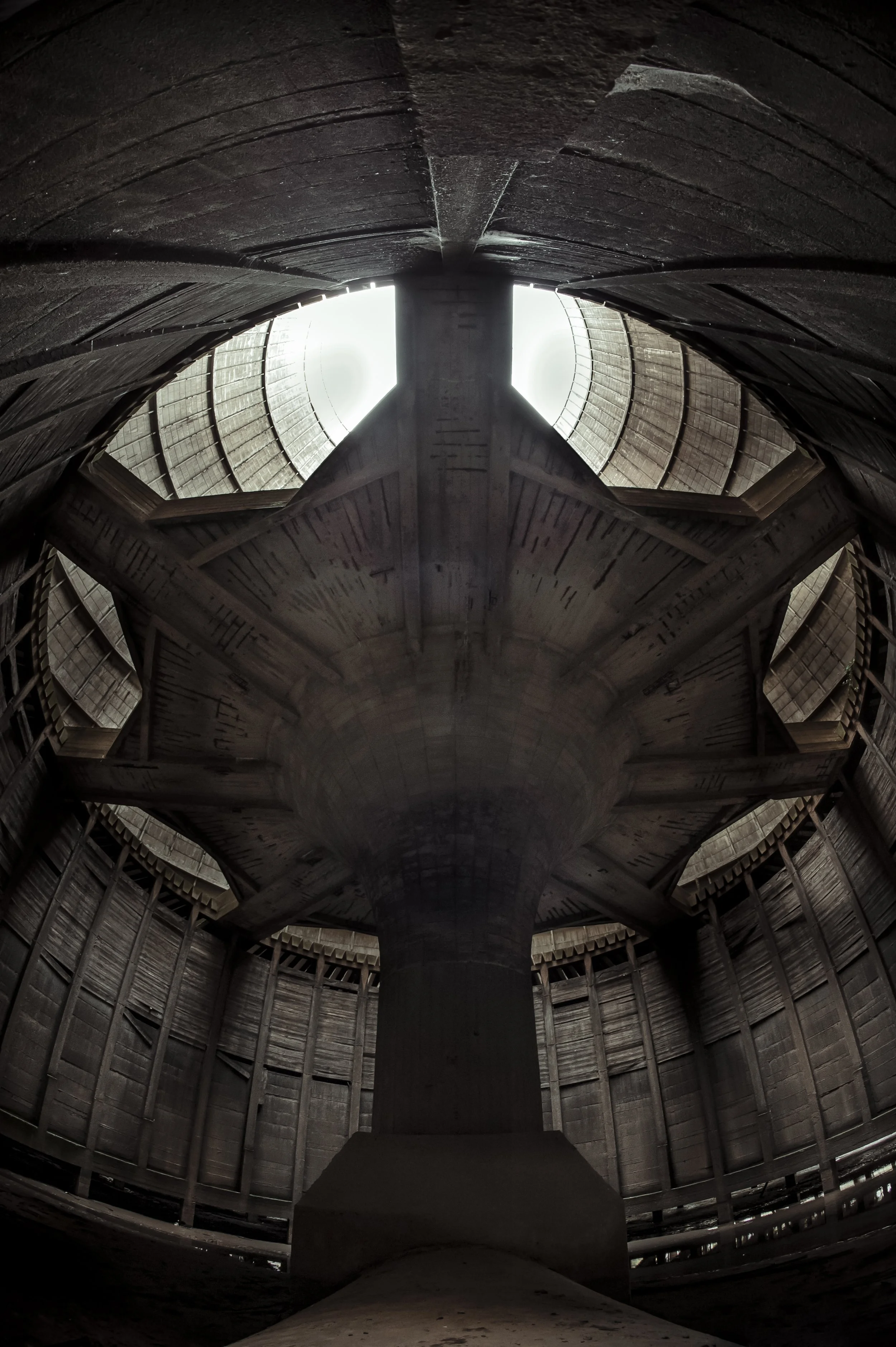
Water Collection Pond (Basin): A massive concrete pond at the very base collects the cooled water to be reused.
Structural Struts: The entire shell rests on a series of angled, heavy-duty concrete pillars (struts) that allow air to enter the base.
Fill Material (Packing): Above the pond, there is a large stack of corrugated plastic or wood packing. The hot water is sprayed onto this material, creating a large surface area for water to cascade down, maximizing contact with the rising air.
Spray Nozzles: Located above the fill, these distribute the hot water evenly, spraying it down in a mist to initiate the cooling process.
Drift Eliminators: These are angled slats located above the sprayers. They trap tiny water droplets (drift) before they can escape, preventing water loss and reducing potential air pollution.
It’s an absolute must for any “urbexer” to have seen or been able to photograph such a stunning structure and we were lucky to visit this location twice whilst on our European adventures ( somewhere in Belgium )